Saturday, October 10, 2015

Why Politeness Needs to Die

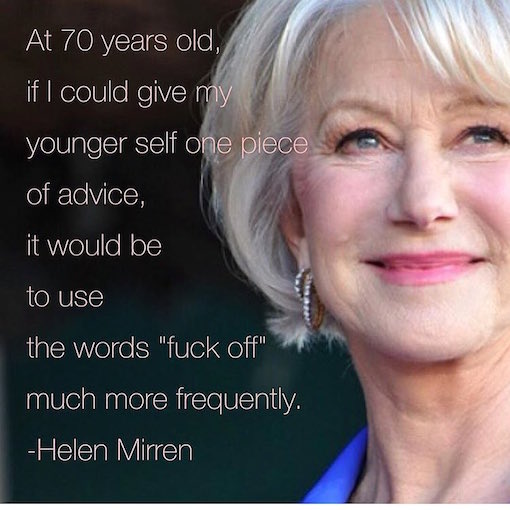
      I am vehemently anti-politeness. I have to come to this conclusion after years of self-reflection and general observation. The entire concept of being "polite" needs to curl up and die. Maybe it's because I was born and raised in the South where there is that supposed Southern White, Abled, Middle Class, Christian, Patriarchal Hopsitality, but politeness was always emphasized to me growing up. I was expected to do and say specific things because it was polite. I was expected to respond in a certain way because it was polite. And I'm calling bullshit.

    Now, before anyone burns me at the stake, let me explain what I am vehemently for- I am for kindness. I am for being loving and kind towards my fellow humans and the rest of this gorgeous planet. I am for being considerate of others because that should be the default way in which we treat each other. I am for cultivating peacefulness and gentleness in the way we interact and relate to each other and the world around us.
Notice how the focus is on how you are perceived
and treated, not on being kind to others.
 Being polite to "get" something.

    So what's the distinction, you ask? Well, for some people there may not be any. But for me, at least the way it was presented to me or the way I perceived it until just recently in my adult life, being polite was something you had to do out of social custom. It was what "good" children and adults did. It was the opposite of rude. If you didn't want to be though rude, you had to be polite. And rudeness was "bad". And so I spent most of my life being polite as some kind of behavioralist reflex to certian cues and situations because all I knew is if I didn't, I was bad. And in some ways that meant I was an absolute door mat. And all I can think is how much different I would have perceived my place in the world is that instead of being polite, I was told to be kind.
sic [People]


   We say please and thank you because it's kind to let people know we appreciate them. The use gentle words because it is kind. We wait our turn, lower our voices in crowded places, etc. because it is kind to those around us. Not because it's some constructed social custom that we do or face social penalty. Because we are striving to be kind to one another. And because we need to also be kind to ourselves, we have to have boundaries. And this is one of the biggest lessons I think politeness fails to instill. Because it's ok to be rude sometimes. Sometimes it's even necessary. And when we set up this polite-rude dichotomy, we severely limit our range of acceptable emotional responses.

   Especially as a female, the need to be polite is hammered into to everything you do. This concept has been connected through all kinds of problematic situations, like rape culture and the ever present "friend zone" concept. It already marginalized people feeling the need to apologize for taking up space and not feeling empowered to take up more for fear of being rude or off-putting.


   So for me, what does this look like in action? It's not buying into the ageist practice of using titles for a person just because they may be older than you. If a person wants to be called Mrs. Whatever or Sir or Ma'am, it is kind to oblige because it is considerate of their comfort level and costs a person nothing. Showing gratitude is important, but that doesn't have to be in the form of some preconceived phrase. Body language and tone, especially in children who may not be able to spew out their rehearsed responses, especially in times of excitement, is just as sufficient. Intention over formality. A begrudging "thank you" shouldn't be more meaningful than a squeal of excitement. A forced "I'm sorry" is pointless.

   When we get so caught up in the formality that we are teaching the wrong lessons and implying the wrong values, I can no longer feign support. So to the concept of politeness, I bid you adieu. I will practice kindness. And I will teach kindness to my offspring. And I will not loose one ounce of sleep if they forget to spit out a "thank you" or "sir". And I will not allow people to treat me poorly and smile silently until I can politely excuse myself. Because that's not kind.

Tuesday, August 18, 2015

Ain't I A Human?

    Once again, in an effort to get some stuff out of my brain to make room for new stuff, I'm going to hash out some thoughts I've been having as of late. There were two instances in the last week that sparked very similar feelings for me, and I would like to dissect them here for you guys. The first was a meme I saw popping up all over the place. It went something along the lines of "I've never heard of a well dressed, well spoken black man getting assaulted by the police for nothing" or something to that affect. The second is a conversation I peripherally participated in. A person made the comment that if women wanted to be respected, they needed to dress a certain way otherwise they were "asking" for mistreatment.

   Now I'm just going to call it- those two things were incredibly racist and sexist, respectively. But what scares me is that the inherent racism and sexism in those statements wasn't apparent to some people. What's more, the sentiment that underlies both of those examples is the same, and it's what I want to talk about. Both center around the idea that humanity is something that must be earned. That treating people like actual people- with kindness and respect- is something you only have to do after a person has proven themself worthy of being treated like a human being. Until they have proven themselves, you can treat them like shit and feel completely justified in doing so. But let's back up and unpack this a bit.

  A lot of how you respond to this discussion will depend on your basic concept of morality. I am coming from the belief that all people (really, all living things) deserve to be treated with the most basic kindness and dignity if only because we are all sharing this planet and this space. There are similar beliefs in many religious institutions- the Golden Rule and whatnot. If you don't have any beliefs like these or your personal moral standpoint is that all people are basically bad, or bad until proven otherwise, or that they must earn your respect in someway, we are probably diverging at this point. However, I urge you to reflect on this moral belief system as we continue.

  For one, consider how it comes back on you. If your standpoint is that other people must meet your own requirements in order to be treated well, it would stand that you must meet the requirements of others in order to expect decent treatment. It should be obvious that people have very different opinions about what is good vs. bad or right vs. wrong. Let's take the examples above. If you think people should dress well and speak well in order to be treated like human beings- do you never make grammatical errors? Are you always in an overly presentable state? What about sweats or work out clothes? Ever left home in your pajamas for a quick trip to the store? Hair unkept? Or the sexist example. Maybe you think mini skirts reek of ill repute. But what about tank tops? Women who wear pants? Your hair uncovered? I can easily find you examples of people and places where any of the above would be considered "bad" or "wrong". So which standard should you be personally held to? And are you ready to accept being mistreated under the rule that no one has to treat you well until you meet their qualifications?

  Another thing to consider when we talk about these rules for behavior and their implied justification for maltreatment is where these rules come from. It's no surprise that the majority of the people I saw passing around that racist meme were white. Who gets to decide what speech is proper? There is a long history and scholarship on the evolution of Ebonics and African-American dialect. And American English is itself a bastardization of sorts of English. Who gets to decide what is proper dress? "Proper" is entirely culturally dependent. And when you have a dominant culture or sub culture holding institutionalized power, it's easy to use "proper" as a means of subjugation and disenfranchisement. We (the dominant culture in power) use Our power to create standards that reflect Our own comfort level and custom and hold Them up to those standards-standards which They may not share, had no part in establishing, and may not be interested in emulating- and use Their failure to assimilate (whether due to inability or unwillingness) as justification for furthering criminalizing and vilifying Them and securing Our own place in power. It's a rigged game.

  But I urge you also to consider not only the larger cultural implications of these attitudes, but your own internal thoughts and feelings. Namely, why do you feel the need to set these "rules" about how people should/should not act in order to be treated like basic human beings? To be completely honest, when I catch myself trying to play this game in my head, it's usually for one of two reasons. One is that sometimes I find myself trying to justify my own mistreatment. By saying that people deserve to be treated like shit if they don't jump through whatever arbitrary hoop, I can maintain the thought that people in my own life treated me poorly simply because I deserved it. I missed the mark of being "good" in some way, so I was "asking for it". The alternative, of course, is to realize that I did not deserve to be treated badly, but that means that someone I cared about/loved/trusted/whatever was mean, or worse, maybe didn't care about/love/trust me back. And that can be hard to swallow. So sometimes it's easier to pretend that we actually have control over how other people treat us and the we are responsible for our own mistreatment. And by extrapolation, so is that person who got shot down in the middle of the street or raped on their way home from work. The second reason I sometimes fall into this mindset is because to acknowledge that all people deserve to be treated with basic humanity is to also acknowledge the vast number of ways this doesn't happen. It's to realize that slavery and rape and abuse and racism and hate are rampant and problematic. And it's really hard to hold that and not do anything about it. And doing something about it can seem overwhelming, and not wanting to do anything can seem selfish. And let's face it, it is selfish. And feeling overwhelmed and selfish leads to guilt and shame and none of those are pleasant feelings for us. So it's easier to pretend once again that those that are mistreated are somehow responsible for their own fates and that there really isn't a world full of sadness that we should be doing something about.

    So my one last point of order is to point out that, even if you buy into the idea that people are necessarily bad and deserving of mistreatment- that they are criminals and whores until proven otherwise- you still have a choice in how YOU treat people. I choose to default on kindness and hold the basic belief that we are all human and all entitled to being treated as such. I fall back on the idea that how we treat those that we consider the lowest of us counts a lot more than whose ass we kiss. Even if you truly believe the world operates based on these rules and you find them legitimate, that doesn't mean that they can't be changed. And if you really do see that we as a species have some serious problems in how we treat one another, you can do something small. It doesn't have to be overwhelming or earth shattering. You can start by treating other people like people. Regardless of how they look, speak, or act. And then you can start encouraging other people treat people like people. And then you can start demanding it.

Wednesday, August 5, 2015

A Seat at the Table

       By now most people have heard of the family being screamed at and basically kicked out of a restaurant because of their crying toddler. It's been all over the news and blogs. There have been discussions upon discussions. I've seen a half a dozen polls about whose "side" people would take (side note: What is with all the polls about things? Why should anyone care about whatever percent of some audience thinks about their personal situation? I don't get it). I didn't really address it because I was kind of of the mind that someone else would probably say it better. And I'm working through some really intense reading right now and didn't want to get distracted. But I have found some ideas rolling around in my head that don't appear to be represented completely elsewhere. And there are other ideas about other things also rolling around, and it's getting kind of crowded. I need to clear some space so I can process what I'm reading. So here goes...

    For those of you unfamiliar, the basic gist of the situation is this- A family with a toddler went to eat at a crowded diner. The toddler was restless and some version of whining/crying for the 40 minutes it took the food to come. The owner/manager then came over, yelled at the toddler, asked the family to leave. When the family complained on social media, the manager double down, cussed them out, and all in all didn't seem to be to caught up in customer service. There have been three basic reactions 1) Wow, it's not really acceptable to scream at your customers. 2) Yeah! Right on! Kids in restaurants are the worst! and 3) We can't be sure what actually happened; maybe both the manager and parents were at fault.

  So let's just back up for a second. I don't really want to discuss the manager at all. I can think of very few situations where screaming at people is acceptable, and this one just doesn't cut it. Moving on, I want to back up to the family's behavior and the general commentary around it. Now, in no accounts I read was the toddler accused of physically imposing on anyone. She didn't throw things. She didn't hit someone. She was in her own space. She was making noise. The transgression we are talking about here is a toddler making noise.

   Now, I saw a lot of "they should have left" or "get a babysitter" or "take the kid outside" or whatevers. Apparently it was raining, so outside wasn't an option. Leaving would mean getting to another place to eat, waiting for a table, waiting for food all over again- exponentially lengthening the amount of time before the toddler gets fed. I also saw "why didn't they bring their own snacks?" which is hilarious to me because I've also seen parents get berated for bringing outside food into restaurants. Damned-if-you-do type scenario, really. And I have to laugh at the whole "leave your kid with a babysitter" comment. First off, these people were out of town. Secondly, not everyone can afford a babysitter. Third, well, just keep reading....But once again, worst case scenario- these parents were letting their child make noise.

    So what a lot of people appear to be saying is that toddlers are unwelcome in public space, because they make noise. Now, let's talk about toddlers for a minute. Toddlers make noise. They just do. They don't really understand volume control. They have short attention spans. There brains are underdeveloped and they just don't have the capacity to act like adults. They aren't adults. Their children. We were at a restaurant the other day. You know who was louder than my toddler? An elderly gentlemen who seemed to have hearing issues. He was basically shouting his entire conversation with his table. But that is pretty developmentally appropriate for him, given he has trouble hearing. Just like it is appropriate for some people to make sudden, jerking movements or random outbursts of noise and words. Yet children are held to a standard outside of what can be reasonably expected from them. So the solution that is often is offered is simply "don't bring them". If you can't act like a fully capable adult, you shouldn't be in public. Which seems kind of odd to me, because I'm not sure when we decided adults are the only humans that count.

   The other retort I keep hearing is "entitlement". These parents feel entitled to bring their brats everywhere or that kids are somehow entitled to be out in public. Like taking up space is something you have to earn. But what most people don't recognize is that statement is it's own kind of entitlement. Adults feeling like they are entitled to control and micromanage their environment. I have been at a restaurant and had to sit within ear shot of some horribly racist/misogynist conversations. I have been in places where people were talking louder than I liked. And a big thing for me being prone to migraines and being sensitive to smells- I have been near people wearing entirely too much fragrance that required me medicating myself to be comfortable. There are people who are horribly racist and would rather not eat in a restaurant with certain ethnic groups. There are people who may feel revulsion at the sight of some physical disabilities. There are people who don't like the way others dress. Are we really going to argue that we are entitled to dictate who gets to take up space?  That attitude reeks of entitlement.

  Anyway, back to this idea that children don't count as people and if they do, certainly don't have rights to pubic spaces, and if they do, only if they follow strict guidelines that most adults are not held to. Ok. You know what that results in? Children not being visible. But if that's your attitude, you probably think that's a good thing. But hold on- someone has to care for the children. And for all the "hire a babysitter" or "leave them with the grandparents" comments- the reality is those aren't always options for most people. So not only are we erasing children from public, we are erasing parents, and most of the time that means erasing mothers. Motherhood/parenthood is relegated to behind closed doors. Don't you dare leave your house unless you can guarantee you mere existence will never ever inconvenience another person. Don't let people see you. Don't impose, simply by being. So now we have this world where parenting and child rearing is nearly invisible. It's not honored, hell, it's not even acknowledged. The continuation of our species, the social fabric of our future (cliche, I know, but true) is shut away because somehow we decided it was less than.

   I'm really sure how this happened, but I'm certain it's complex. I think it has to do with how we value monetary gain over other types of productivity. Child-rearing in a traditional sense doesn't bring home a pay check, so it's not relevant. It's how we view women and motherhood. It's our constant desire to divorce ourselves from the natural world of reproduction and life and focus on the clean, shiny industrial world we have created. It's involved, to say the least. But what has that left us with? In most cultures, everyone is included. The elderly, the young, the middle age, the new parents- they all interact int the same spaces and learn from each other and teach one another. Our culture is becoming fairly unique in the way it is organized by age. We take spaces which were traditional familial and communal- such as places of worship- and make Kid's Church. Now the young ones are here and the adults over there. We segregate schools by age, with children now not having regular interactions with peers of different age groups. We lose the interage relationships, we lose those experiences. And then we sit back and wonder why children can't interact well with adults or why adults have trouble cooperating generationally.

   Did it never occur to anyone that if you want a toddler to know how to act at a restaurant, they at some point need to be in a restaurant?  That they might not be great at it right off the bat? For all the woes about the upcoming generations of young adults (which I don't really buy, by the way), did anyone think that maybe they would integrate with society a little better if they had had any practice at all before being flung out into the mess of it at a late age? These are the thoughts I had reading the comments and discussions around that restaurant incident. How utterly sad it makes me that we as a culture have this value of children being seen but not hear, or really not being seen at all. That adults some how are "better than" and that it is all tied basically to developmental capacity, even at the risk of the adults who may not quite meet the bar. That there is an expectation that children (and by extension, their parents) should only be welcome in public space when they meet some ridiculous arbitrary requirements, without having to acknowledge that they learn by being in those spaces.

  In my humble opinion, this creates a situation where everyone loses. Yes, you enjoyed a child-free restaurant experience. Good for you. But at what cost to how we view ourselves and the rest of humanity? At what loss of community? Let's get something straight- children are people who need to eat. They sometimes need to fly places. Their parents need to go to stores. If there is a place that is inappropriate for children, make it 21 and up or 18 and up or whatever. But let's just acknowledge that a space open to people is a space open to children, and if you can't handle that, I would say you don't know how to handle yourself in a public space and may want to consider staying home.
  

Monday, June 29, 2015

Let's All Be Careful

      I have a really good friend, and when I was at a particularly trying and confusing point in my life, he gave me some really good advice.

     "Be really fucking careful."

     Good advice, and I try to remember it from time to time. And now, I'm sharing it with you. Because I've noticed a trend. I'm a part of a lot of mothering groups and boards and follow a lot of pages. I know that breastfeeding out there in the world can suck. Moms are told to leave or cover up or that what they are doing is gross or indecent. And it gets old. It gets *so old* trying to explain why feeding a baby is not a sex act or in some way offensive. I get it. I totally do. 

    But what I have noticed is a sort of war of comparisons. Breastfeeding moms and pictures of celebrities in low cut or see through dresses. Nudity. Cleavage. All of these things. Irate (and justifiably so) mothers share pictures they find on the internet of breasts- all kinds of exposed breasts- and bemoan the fact that breastfeeding is so looked down upon while these breasts are accepted.

   And your right. It sucks. It sucks that sexualized breasts or breasts pleasing to the male gaze are accepted while functional and biological breasts are frowned upon. And it's because of the over arching patriarchy and the way women are valued and the way motherhood is valued and our relationship to our own bodies. It's multifaceted and multilayered and complicated. And it sucks. 

   But here is my advice to you- be really fucking careful. Be careful because when we start to judge who gets to use their bodies in what ways, we are doing the exact same thing as those who dictate when and how breastfeeding is acceptable. You sitting around and deciding which bathing suits or red carpet dresses are acceptable is no different than someone sitting around and deciding whether or not breastfeeding moms should be covered. 

   When we start to dictate who should use their bodies and how and under what circumstances, we are playing the same game. You know what the real solution is? Let's lift each other up. Let's decide once and for all that each person's body is their own. Their own to use however they see fit.

   Instead of saying, "Oh my god, why is the dress okay and my nursing  photo isn't?", let's say "Oh my god, she looks amazing! Her body is beautiful and I honor her. Let's all honor each other with the same appreciation and reverence."

   This isn't about us versus them. The minute we believe that is minute we believe some other person is allowed to dictate our own selves. We when try to steal the power from another woman, we are giving up our own. 

   So let's all be really fucking careful that we aren't creating our own powerlessness. That we aren't disempowering our fellow human beings. And that we are confident enough in ourselves to hold not only our own, but the space next to us as well. 

Sunday, June 14, 2015

Perrin's TWO


audriaabney.com

  I can't believe we survived another year. I have to say, I feel like we turned a HUGE corner at the 18 month mark. Things have gotten so much less stressful. I think a big part of it was Perrin's increased communication abilities. He has become quite chatty and it's a nice break from constantly playing the "Oh god, why are you crying!?" game. He also hates the car slightly less, which makes life a bit easier. He is starting to get really fun. We can actually do things together, as opposed to Perrin just tagging along. So, an overview of two-year old Perrin:

-Yes, he still sleeps in our bed. And it's awesome and we wouldn't change it. He has had his own bed for a year now but has zero interest in it and that's fine with us because we get ALL THE SNUGGLES.

audriaabney.com

- He loves to play outside. All the time. Rain or shine. Freezing or a hundred degrees.

-He loves to read books. All day long, he is asking to be read to. Right now he is really into "I Love You Little One", "Good Night Moon", "Huggly Gets Dressed" and "Nursies Are for Night Time".

-He is about 31 lbs. and 36 1/2 in. tall.

- His favorite things to do are boss the animals around and ride his bike.

- He has seen Godsmack, The Pretty Reckless, Seether, Five Finger Death Punch, and Three Days Grace Live. He has tickets to see and MEET Slipknot in August.

- He has gone from 4 teeth to 16 teeth in the past year. We also discovered those teeth suck and 4 of them need extensive work done. Boo.

- His favorite foods are peas, Pirate Booty, watermelon, beets, scrambled eggs, and toast with butter.

- His current sizes are 2-3T for clothes and 8 for shoes.

- He started showing interest in the potty again at about 20 months and we were completely done with diapers by 22 months. It was a ridiculously smooth process.

- He has (knock on wood) only been sick once- an upper respiratory infection turned ear infection.

- He loves all things animals- books, pictures, toys. If it has anything to do with an animal, he enjoys it.

- He loves watching sports, but especially American football, basketball, and hockey.

-He's been doing swim lessons for about 3 months now and is doing great with them. He loves being in the water. 
audriaabney.com


- This is the one I'm most proud of- He's still nursing! We made it to my two year goal. I said from the get go that I would love to let him self wean, but that I really wanted at least make it to two years. The immune support during that time was really important to me, as well as all the other benefits. And he is still going strong! We are starting to toy with night weaning and may make a few other gentle adjustments over the next year, but I am so glad we were able to keep going for as long as we have. We had so much trouble in the beginning and it is so wonderful to see the payout for all the hard work all three of us put into it. We are by no means "done", but I cannot express how awesome it feels to have met our goal.

   So that is basically Perrin, as of his second birthday. It hasn't been easy these past two years, but it's pretty cool to see him really coming into himself.
audriaabney.com

Sunday, May 10, 2015

Happy Mother's Day

    In addition to the warm sentiments directed to their own mothers, many people take time on Mother's Day to express the joy they receive from their own experience as a mother. I know plenty of these women. They are so excited to spend Mother's Day with the children that made them a mother. Even on a regular ole day of the year, they will gush over how amazing their role of Motherhood has been. Hard, yes, but so fulfilling! So wonderful! They can't remember what their life was like before their children were in it. And they can't imagine their life without them. They are so thankful for their children for placing them into the role of Motherhood.

   I am not one of those women. I know them, and I love many of them. I think they are wonderful people. And for a while, I was jealous of their enjoyment of Motherhood. I assumed that the post-partum depression was the obstacle in my way from that ethereal maternal experience. After all, when most women were endlessly kissing their tiny baby's faces, I was contemplating adoption. But almost two years later, the PPD is behind me and has been for almost a year now. Now I know that truly, it's just not who I am. 

   I remember what it was like before Perrin. I remember it vividly and fondly. I remember the pure selfishness with which I lived my life and absolute freedom I had. And I can easily picture what our lives would be like if he wasn't here. I can name the trips we would have taken and the things we would have done. Sometimes I find these thoughts entertaining, just because of the stark differences in those images and our reality. And sometimes, on the hard days, I find them incredibly painful as I find myself again questioning whether or not we made the right choices in our lives. 

   I do not like Motherhood. I do not find fulfillment in the ideal. When I don the label it feels stuffy and ill-fitted. I do not experience the romanticism that I know to exist for others. But I do like Perrin. I love Perrin. I love him fiercely. And whether I like it or not, I am his mother. And Joey and I owe it to him to raise him up in the love and kindness that every human deserves. Perrin is such a wonderful person. So I don't mind being his mother. But I don't like being a Mother. This distinction is subtle. But to me, it is a glaring disconnect.

   So this Mother's Day, I want to clink glasses with all the women who don't feel the warm fuzzies. The ones who find themselves embarrassed or confused by the emotions they feel on a day honoring Motherhood in the abstract. Especially when for so many women, the reality of their own motherhood is anything but honored. Because I truly believe you don't have to love Motherhood to love your child. And you don't have to be fulfilled in Motherhood to be a damn good mother. There is no one right way to mother a child. So for anyone else who finds today especially painful or disconcerting, just know you are not alone. These feelings can be complex, but there is no shame or guilt in them. And the more we can be open about them and speak our own truths, the more the idea of Motherhood will reflect what motherhood actually is. 

Saturday, May 2, 2015

Goodbye my diapers, goodbye my friends....


   Of all the things baby related that Joey and I discussed and decided on, cloth diapering was pretty far down on the priority list. We both like the idea of saving a boat load of money and reducing our environmental footprint, but we didn't have a strong attachment to the concept. We knew if push came to shove and cloth diapering didn't work out for us, we could be ok with that. But it did. It worked out so well.

   Joey has been in charge of the diaper department since day one, and he will be the first to tell you that cloth diapering has been simple and required pretty minimal effort. We were also lucky that most of our start up supplies was gifted to us for our baby shower. We bought a couple wetbags, our cloth wipes, and towards the end of our diapering journey I *splurged* and got a few cute print diapers used for $5-$10 a piece. But other than those late additions, we used the same basic stash for our entire diapering journey.

  We had 3 newborn diapers, 2 of which I bought specifically for newborn pictures so they wouldn't look so baggy. Everything else was one-size, so we used them from birth up till potty independence. We had two packs of cloth wipes, 12 Fuzzibunz pocket diapers, 6 Bum Genius pocket diapers, 4 planet wise wet bags for the diaper bag, 1 large wet bag as a hamper/diaper pail, a sprayer, and 4 hemp inserts on top of the microfiber ones that came with our diapers. It was a pretty minimal stash. Even counting all the extra diapers I picked up, we have only had 31 diapers total over our whole journey.

  But they served their purpose. We have bought exactly 2 packs of disposable diapers- one newborn pack to get us through the meconium stage, and one pack when Perrin was teething and got a gnarly diaper rash that needed max strength bum cream. We used about half of each pack and gave the rest away. We took our cloth on our vacations, no problem (although TBH having extra space for my own clothes wouldn't have been the worst thing ever, but we did only bring carry on). All included, we have spent well under $500 on diapering Perrin. Not bad for 22 months.

  But now it is time to move on. We have been doing part time EC with Perrin since he was around 8 months. He was very close to potty independence around 17 months, only using diapers for sleep, but we traveled over the holidays and relied more heavily on diapers and he lost interest in the toilet. However at 20 months I noticed he was dry most of the time when I changed him, so we switched to trainers and started back with the potty. By 21 months the trainers were unnecessary and we were in underwear and using diapers for night time only. Now, at 22 months, he wakes up dry in the morning. We use the trainers still at night *just in case*, but our diapering days are behind us.

  And it's funny, because we are sad and sentimental. I'm sure all parents are when their kids reach any milestone, but we also have found that we are just attached to our diapers in general. As we were washing and packing away all our stash, Joey and I each had favorites we wanted to keep. Joey could tell you which he liked best for nights versus days, etc. It felt weird to think we wouldn't be washing them and stuffing them and putting them in the little tote we store them in. Some of our stash (the extra sentimental part) is packed away in a box with our favorite baby clothes and other things. The rest will be loaned out and eventually sold. So our cloth diaper journey is at an end. But I must say, it has been a great run. I would highly recommend it to any family.